Family guide
Family Board Game Storage
Family storage has to serve several kinds of users at once: kids choosing a quick game, adults protecting fragile titles, and everyone returning boxes after a busy night. Put shared favorites where the whole household can reset them, and keep delicate or long-session games in a calmer adult-controlled zone.
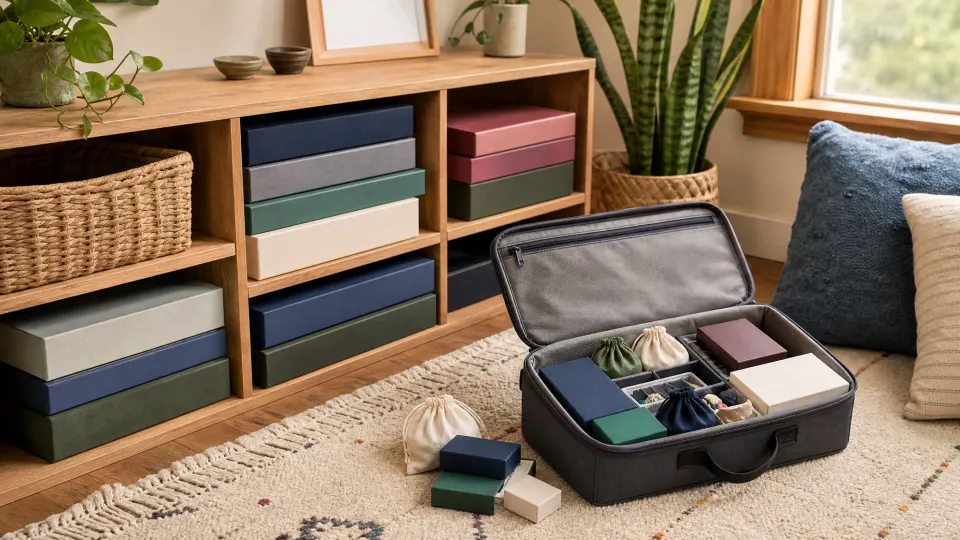
Separate quick family games from fragile adult titles
Map the shelf by who is allowed to pull each game without help. Durable family staples can sit at shared reach height, while oversized party boxes, delicate legacy games, and adult-only strategy titles need a separate control point. Use the largest shared favorite as the spacing test so cleanup does not depend on lifting a stack.
Set a shared family reset height
Store sturdy family favorites where adults and older kids can both return them without climbing, moving chairs, or lifting heavy stacks. Long strategy games and fragile components can live outside the shared reset zone. The goal is a shelf that several people can use after game night without turning cleanup into a sorting session.
Separate quick family games from fragile titles
A family cabinet needs different zones for quick games, child-reachable favorites, and fragile adult-only titles. Put mixed-age game-night options in the front access area where players can scan them, then keep delicate or long-session games higher, lower, or behind a labeled door. Adult reset space matters because cleanup often happens after the room is already busy again.
Use labels the whole family can follow
Pictures, colors, or short labels work better than a detailed catalog when several people reset the room. Group by family night, quick games, grown-up games, little-kid games, and adult-help pieces. The label should make sense to the person putting the box away, not just the person who organized it.
Protect shared games from rushed resets
Shared family shelves get reset by tired players, so avoid tight cubbies, unstable rows, and mixed stacks that require careful handling. Leave space for lids, use trays for small boxes, and keep heavy games away from the busiest family row. The storage should tolerate normal cleanup without crushing the boxes used most often.
Quick checklist for this storage plan
- Measure adult reset space and child reach before choosing the bedroom or den cabinet
- Keep shared game-night favorites where adults and older kids can both reach
- Keep fragile adult-only games above the family row but not where they become hard to lift
- Leave reset space so family cleanup does not bury fragile titles
- Separate quick games from fragile adult-only titles.
Board game fit check
Use this quick shelf check before buying bins, cabinets, or cube units for a small home.
- Primary measurement: child reach, adult reset space, cabinet swing, and heavy-game placement
- Clearance check: child reach, adult reset space, heavy boxes, and cabinet swing
- Access test: pull a family favorite while fragile adult titles stay protected nearby
- Calculator follow-up: use dimensions after deciding which shelves are family-safe
For a measured plan, use the board game shelf-fit calculator. You can also compare options in the shelf depth guide.