Dimensions guide
Board Game Shelf Depth Guide
Shelf depth is useful only after backs, lips, trim, doors, and hand space are subtracted from the advertised dimension. Start with the deepest box that needs frequent access, then reserve the tight or recessed spots for games that will not be pulled every week.
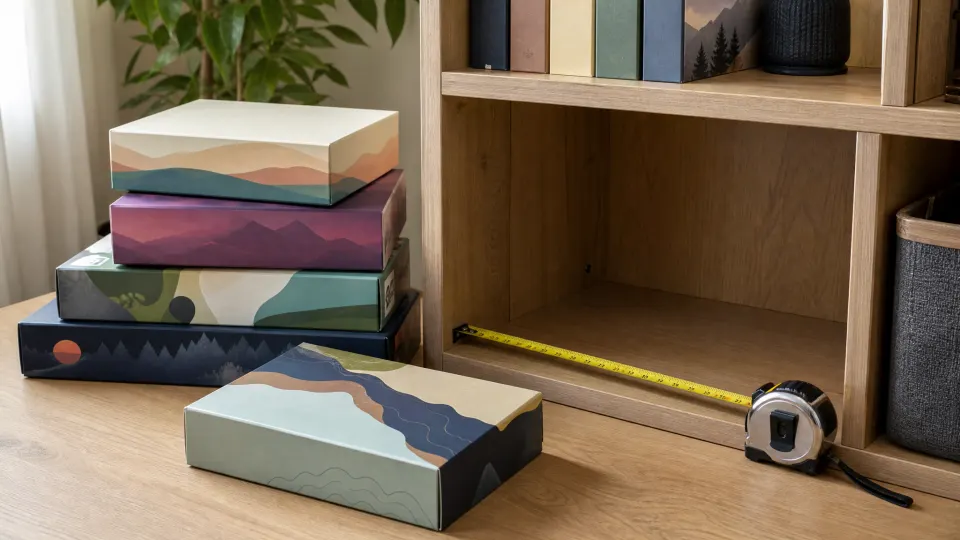
Measure usable depth from back obstruction to front edge
Measure the shelf from the deepest back obstruction to the front edge before trusting the listed furniture depth. A back panel, wall trim, outlet, or shelf lip can steal the clearance a square game needs. The useful number is the remaining box depth plus a front grip, not the outside dimension printed on the unit.
Turn depth measurements into a pullable shelf limit
A deep shelf only works when the box can be gripped at the front without dragging neighboring games forward. Treat any overhang, recessed back, or tight cabinet door as part of the measurement. Shallow games can use shallower rows so true deep storage stays available for boxes that need it.
Measure depth from the obstruction forward
A closet bookcase can lose usable depth to backs, trim, wall outlets, or a shelf lip. Measure from that obstruction to the front edge, then leave enough grip room for deep square boxes to come out without a helper. Exposed shelves should solve the pull problem; hidden shelves need labels because deep storage makes titles harder to scan.
Track depth numbers for future furniture
Keep a short note with the deepest box, the shelf's usable depth, and any overhang you allow. Those numbers make future furniture decisions faster and prevent buying a cabinet that fits the average game while pushing the deepest boxes past the edge.
Prevent depth-related box wear
Depth mistakes usually show up as rubbed front corners, bowed backs, or boxes that scrape every time they leave the shelf. A measured row with a little pull room protects the box better than forcing a deep game into a shallow opening.
Depth scenario: advertised depth versus usable depth
A 13-inch shelf may offer less than 12 inches of usable depth after a back panel, lip, or door track. Measure from the obstruction to the front edge, then add pull clearance before deciding whether a standard square box belongs there.
Shelf depth decision table
| Factor | Choose | Avoid |
|---|---|---|
| 12-inch square boxes | 12.5+ inches usable depth with pull room | Nominal 12-inch shelf with a back lip |
| Shallow bookcase | Small boxes, card bins, or display row | Oversized boxes with front overhang |
| Closed cabinet | Door and hinge clearance check | Box that fits only before the door closes |
Quick checklist for this storage plan
- Measure front overhang and back panels before choosing the closet bookcase
- Place deep square boxes where the front edge stays readable
- Keep deep boxes low if their front overhang changes the shelf balance
- Keep enough front clearance to grip the deepest box
- Measure from the back obstruction to the front edge.
Board game fit check
Use this quick shelf check before buying bins, cabinets, or cube units for a small home.
- Primary measurement: usable shelf depth, back obstruction, and front overhang
- Clearance check: back panel, front overhang, and pull room at the shelf face
- Access test: grip the deepest box at the front edge without dragging other games forward
- Calculator follow-up: compare shelf depth with the actual front-to-back box footprint
For a measured plan, use the board game shelf-fit calculator. You can also compare options in the shelf depth guide.