Cards guide
Card Game Storage Ideas
Card game storage should start with the played deck, not the original box. Sleeves, dividers, deck boxes, and small expansions change the footprint, so active games need readable rows while bulk and backups get a slower, clearly labeled home.
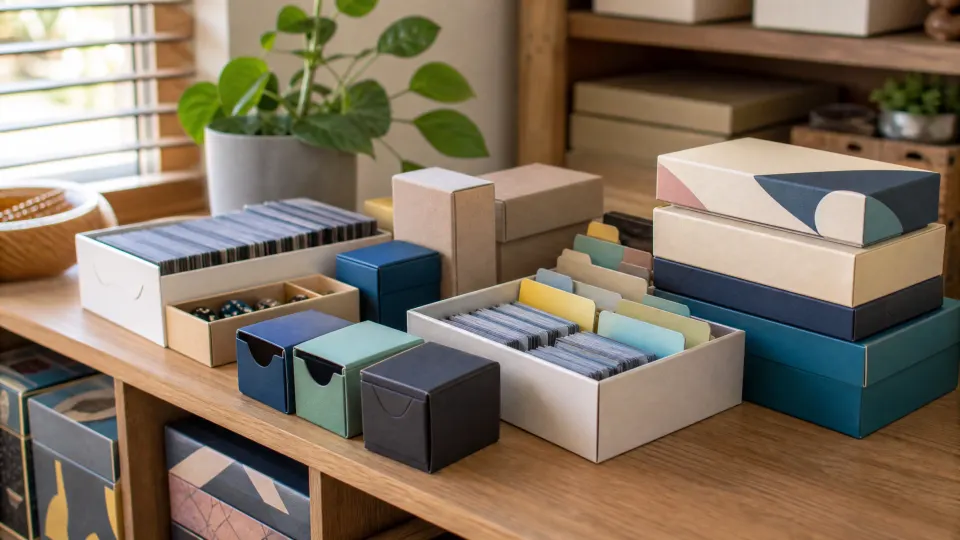
Measure sleeved decks and divider height
Size the card area from the played version of the game, not the empty publisher box. Sleeves, dividers, deck boxes, tokens, and small expansions can turn one neat box into several active pieces. Count the decks that must be ready at once, then choose storage that leaves divider tabs readable.
Separate tournament decks from bulk cards
Keep active TCG decks, current binders, and trade binders in the easiest pull zone. Bulk commons, spare sleeves, sealed product, and retired decks can live lower or farther back as long as dividers and labels stay visible. This keeps deck selection fast without letting archive storage take over the play shelf.
Size trays around sleeves and divider tabs
Card games often outgrow their original boxes once sleeves, deck boxes, or small expansions enter the setup. Measure the sleeved-card height and divider tabs before choosing a tray that only looks tidy empty. Active decks should stay visible near the living-room play area, while expansions and backups need labels before they move into a deeper container.
Use dividers that match deck decisions
Sort TCG cards by format, deck, set, color, or trade status depending on how the cards leave storage. A few durable dividers beat a perfect catalog that nobody updates after deckbuilding. The divider should help a player find a playable deck or a bulk box without reshuffling the whole shelf.
Protect sleeved cards from pressure
Sleeved cards and deck boxes bend when rows are overfilled, stored sideways without support, or packed under board-game weight. Leave finger room in long boxes, keep deck boxes upright, and separate active decks from heavy square games. TCG storage should protect the sleeves as much as the cards.
Quick checklist for this storage plan
- Measure divider height and grab access before choosing the living room tray zone
- Keep sleeved decks close to the play surface and easy to sort
- Keep dense card trays low enough that a full deck row is comfortable to lift
- Leave finger room above dividers so cards come out cleanly
- Measure sleeved cards before buying a pretty box.
Board game fit check
Use this quick shelf check before buying bins, cabinets, or cube units for a small home.
- Primary measurement: sleeved-card height, divider clearance, deck-box width, and tray depth
- Clearance check: sleeved-card height, divider tabs, and tray pull space
- Access test: remove an active deck without bending divider tabs or spilling small expansions
- Calculator follow-up: measure deck boxes separately from board-game boxes
For a measured plan, use the board game shelf-fit calculator. You can also compare options in the shelf depth guide.