Portable guide
Board Game Bag Storage
A game bag needs two homes: the packed route out the door and the reset spot when it comes back. Keep the portable kit light, padded, and labeled enough that it can be repacked without stealing pieces from the main shelf.
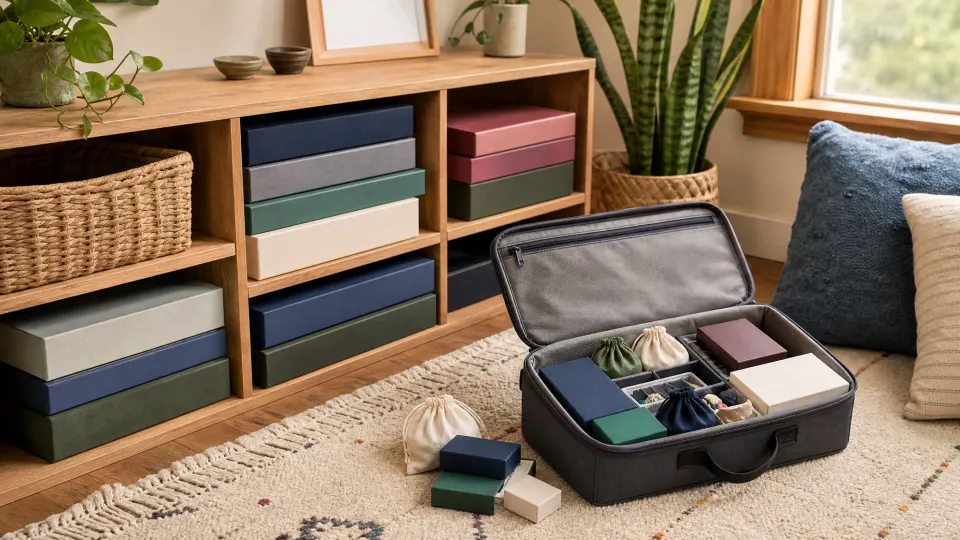
Measure packed bag weight and return-shelf space
Pack the bag the way it will leave the house: games, deck boxes, pencils, score pads, playmats, and any shared dice or tokens. The opening must clear the largest box without scraping corners, and the finished weight has to be comfortable enough to carry back inside. Give the packed kit a return shelf before it becomes permanent floor storage.
Build travel kits around the trip, not the shelf
Choose travel games by packed size, player count, durability, and whether the pieces can survive the bag. Full-size games can stay home unless they are intentionally packed with protection. The travel kit should be easy to refill after a trip so the next outing does not start with missing dice or cards.
Reserve a landing spot for returning bags
Bag storage fails when the packed kit comes home and has nowhere to reset. Keep game-night travel kits on an office staging shelf with enough return space for the bag, the box, and any loose deck boxes. Visible shelves should hold the games people ask for before leaving; out-of-sight kits need labels that explain what is packed inside.
Track the small pieces that make the kit work
Use a short kit list for dice, score pads, pencils, sleeves, bag-only promos, and any borrowed components. Keep the list with the pouch or case so repacking happens before the game returns to the shelf. Travel storage fails when one tiny shared component stays in the suitcase.
Pack for crush risk and loose movement
Travel storage needs structure around corners, cards, and loose tokens before the bag starts moving. Use snug pouches, bands, deck boxes, or small hard cases where appropriate, and avoid packing heavy square games loose beside tiny card boxes. Every travel game should have a return slot before the bag closes.
Quick checklist for this storage plan
- Measure bag weight and return space before choosing the office-corner staging shelf
- Keep game-night bags near the return spot so repacking actually happens
- Keep packed bags at a height that is comfortable to lift with one hand on the handle
- Leave a landing area for the bag before and after travel
- Reserve a landing spot for games returning after travel.
Board game fit check
Use this quick shelf check before buying bins, cabinets, or cube units for a small home.
- Primary measurement: packed bag weight, bag opening, box crush risk, and return slot
- Clearance check: bag opening, packed weight, crush risk, and return shelf
- Access test: pack, lift, and return the travel kit without blocking the shelf it comes back to
- Calculator follow-up: use fit measurements to decide which boxes should travel
For a measured plan, use the board game shelf-fit calculator. You can also compare options in the shelf depth guide.