Rooms guide
Closet Board Game Storage
Plan around hidden closet storage before choosing a cabinet, bin, or shelf. A room storage plan succeeds when the route, floor risk, and visibility match how games are used for closet board game storage. Check closet rods, doors, and stacked bins, then put the games used most often in the easiest reachable zone.
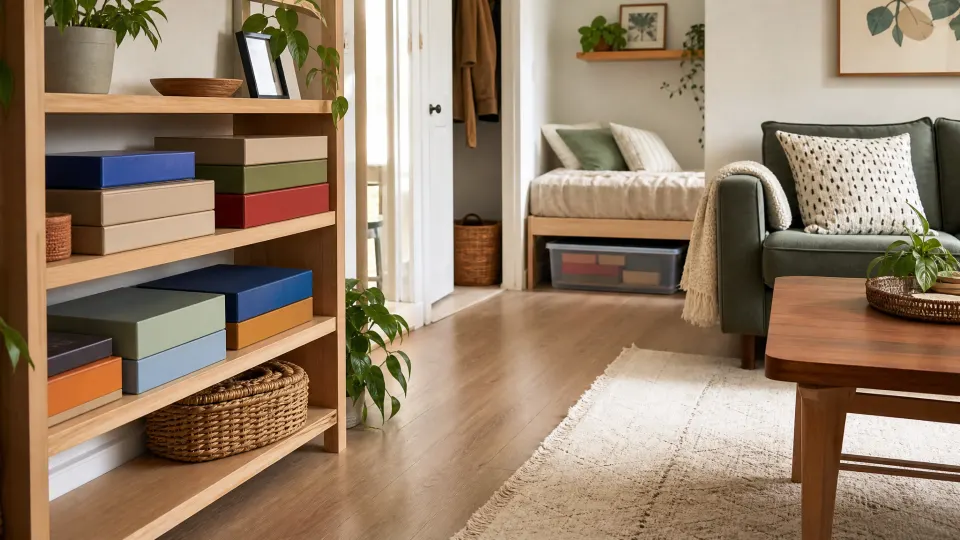
Measure closet access before counting shelf volume
Closet board game storage should be measured from the opening inward, because the first barrier is access rather than raw capacity. Check door swing, sliding tracks, coat rods, hamper space, and the depth needed to pull a labeled bin straight out. The useful capacity is the readable front row plus anything behind it that can be found without unloading the closet.
Give the closet front row a real job
Use the readable front row for party games, overflow, or titles that leave often enough to justify closet space. Heavy boxes should sit low and close to the opening. Anything behind the first row needs a label or inventory note so it can be found without unloading the closet.
Keep the first closet row readable
Closet storage is only useful if the first row can be read without unloading bins, coats, or party supplies. Put overflow and party games near the front, then use rods, shelf risers, or stacked bins only where they do not block the labels. Hidden closet space should have category tags so overflow stays accountable instead of becoming a mixed backlog.
Label closet bins at the pull face
Closet bins should identify their contents before they are moved. Put the label on the side you can see, not on the lid hidden under another bin. A short note for party games, overflow, or expansions will do more than a detailed catalog buried inside the closet.
Protect boxes from rods, tracks, and stacked bins
Closets add hardware risks that open rooms do not: rods, sliding tracks, door lips, and stacked bins. Keep box corners away from those scrape points, avoid damp closet floors, and do not stack heavy bins on games with weak lids.
Quick checklist for this storage plan
- Measure closet rods, doors, and stacked bins before choosing the dining-area closet
- Put overflow and party games where the front row stays readable
- Keep dense overflow low and leave upper closet space for lighter party games
- Leave the closet face clear enough to pull a labeled bin directly
- Keep the first row readable without emptying the closet.
Board game fit check
Use this quick shelf check before buying bins, cabinets, or cube units for a small home.
- Primary measurement: closet opening, rod height, stacked-bin depth, and label visibility
- Clearance check: closet door path, rod height, stacked bins, and readable labels
- Access test: read the front row and remove a party game without unloading the closet
- Calculator follow-up: use fit results after checking the closet opening and rod interference
For a measured plan, use the board game shelf-fit calculator. You can also compare options in the shelf depth guide.