Systems guide
Board Game Inventory Spreadsheet
A board game inventory only works when the spreadsheet language matches the shelf language. Build fields around shelf codes, loans, missing expansions, and stale records so the list can be updated during cleanup instead of becoming a separate chore.
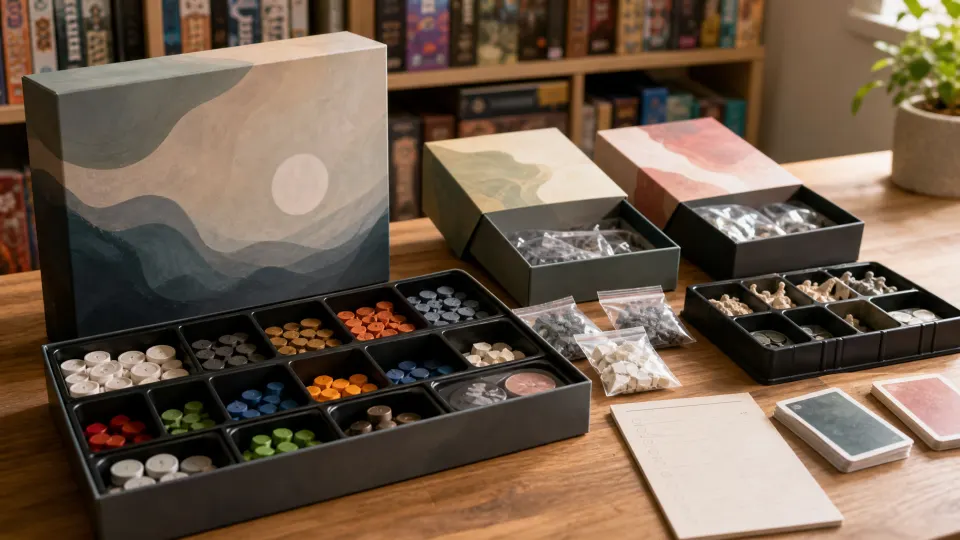
Match inventory fields to physical shelf pressure
Choose spreadsheet fields that answer the questions a shelf cannot show at a glance. Current location, loan status, missing components, expansion ownership, and condition are more useful than a long list of trivia. Add a keep, trial, or purge field only if it helps decide what happens when the shelf runs out of room.
Track where the box lives and where it goes back
The system should answer both halves of cleanup: where the game lives and where it goes back. Add codes or spreadsheet fields only where they reduce hunting for games instead of creating upkeep.
Make the shelf code match the spreadsheet
Inventory only helps if the shelf and the sheet use the same language. Give large collections, loans, and expansion-heavy games shelf codes that can be seen from the hallway shelf, then update the record when a game leaves the home. Tucked-away storage should be labeled before it blends together, otherwise the spreadsheet becomes stale as soon as cleanup happens.
Use inventory codes people will update
Make every code point to something a person can see: shelf A, closet bin 2, loaned to Sam, or expansion box stored flat. If the code cannot be checked while standing near the collection, it will drift out of date. Keep optional fields out of the required workflow so quick updates still happen after game night.
Review the sheet before storage pressure spreads
Use the inventory to spot overfull zones, incomplete games, and boxes that no longer fit their assigned space. Review the inventory before new furniture or expansions make the pressure worse.
Inventory scenario: reorganizing before a move
Before a move, track the box, storage zone, owner, loan status, and keep or trade decision in one simple sheet. The goal is not a perfect catalog; it is a list that tells you what leaves the shelf, what returns to the same zone, and what should not be packed again.
Inventory fields that affect storage
| Factor | Choose | Avoid |
|---|---|---|
| Storage zone | Shelf code or bin name visible in the room | Vague location such as upstairs |
| Loan status | Name and date field | Memory-only tracking |
| Keep decision | Keep, trade, donate, decide later | Unlimited maybe pile |
Quick checklist for this storage plan
- Measure missing expansions and stale records before choosing the hallway shelf
- Keep loans and large collections where the shelf code is easy to verify
- Keep loaned or missing-component games where the shelf code can be verified quickly
- Leave room to scan labels while updating the inventory
- Update the sheet when a game leaves the home, not weeks later.
Board game fit check
Use this quick shelf check before buying bins, cabinets, or cube units for a small home.
- Primary measurement: shelf code visibility, loan status, expansion notes, and pull room
- Clearance check: shelf code visibility, loan status, missing expansions, and pull room
- Access test: update the spreadsheet while standing at the shelf without opening unrelated bins
- Calculator follow-up: enter fit results only where they improve the inventory map
For a measured plan, use the board game shelf-fit calculator. You can also compare options in the shelf depth guide.