Shelves guide
Kallax Alternatives for Board Games
Plan around non-Kallax shelf choices first, then match furniture to the way the collection moves. A cabinet, bookcase, or cube alternative should be judged by the clear interior opening after doors, backs, and shelf pins are considered. Measure door swing and adjustable shelves before assigning the fast-grab zone.
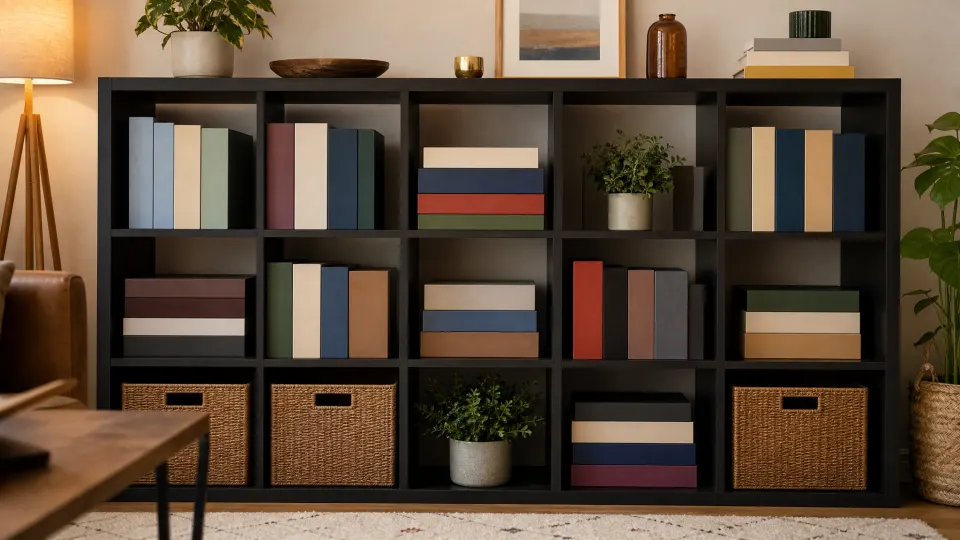
Compare real openings on non-Kallax shelves
Compare alternatives by the space inside the shelf, cabinet, or cube, not by the product name. Adjustable shelves, doors, backs, trim, and shelf pins can all shrink the real opening. Measure one sample oversized box against each candidate before assuming a non-Kallax unit solves the same problem.
Compare shelves by what they let you retrieve
Some alternatives are better for adjustable flat stacks, while others offer cleaner upright rows. Loose-lid games and dense boxes still need lower, steadier spots. Judge each unit by the pull path, shelf-pin spacing, and whether one box can leave without the whole row shifting.
Compare the opening, not the furniture name
When comparing cube shelves, bookcases, and cabinets, write down the usable interior opening after shelves, backs, doors, and pins are in place. Put sample boxes at hand height on the candidate layout and make sure the door still opens freely. Open sections should carry the active rotation; closed sections only help if the label can be read before someone starts digging.
Label alternatives by category, not brand
A cabinet, cube, or adjustable bookcase should still tell players where games return. Use categories such as active strategy, family games, overflow, or trade pile on the shelf face. That makes it easier to compare options by function instead of treating every square opening as interchangeable.
Check side clearance before trusting the alternative
A roomy-looking cabinet can still grind box corners against a lip, hinge, or side wall. Keep a side gap for hand pulls, use bookends where upright rows lean, and avoid storing oversized boxes where door hardware steals the exit path.
Alternative furniture scenario: bookcase versus cabinet
A bookcase can beat a cube unit when adjustable shelves create a deeper opening for campaign boxes. A cabinet can beat both when visual clutter is the problem, but only if hinges, doors, and shelf pins leave enough room to pull the largest game.
Kallax alternative comparison
| Factor | Choose | Avoid |
|---|---|---|
| Adjustable shelves | Bookcase or modular cabinet | Fixed cubes that waste vertical room |
| Visual clutter | Cabinet with front labels | Closed doors with unlabeled stacks |
| Oversized collection | Deep low shelves | Uniform cubes sized for average boxes |
Quick checklist for this storage plan
- Measure door swing and adjustable shelves before choosing the dining-area cabinet
- Keep comparison samples at hand height while judging cube alternatives
- Keep the weight test low while comparing cabinets, cubes, and adjustable shelves
- Confirm door swing and shelf-pin positions before loading the cabinet
- Compare usable interior dimensions, not product names.
Board game fit check
Use this quick shelf check before buying bins, cabinets, or cube units for a small home.
- Primary measurement: true interior opening, shelf-pin positions, and door clearance
- Clearance check: interior opening, adjustable shelf spacing, and door arc
- Access test: change shelf spacing and pull a sample game with the cabinet door fully open
- Calculator follow-up: use measured openings to compare alternatives by usable space
For a measured plan, use the board game shelf-fit calculator. You can also compare options in the shelf depth guide.