Collections guide
Board Game Expansion Storage
Expansion storage has to track where components, rulebooks, empty boxes, and base games live after consolidation. Plan the shelf around component migration and inventory notes so setup stays clear even when expansion boxes no longer sit together.
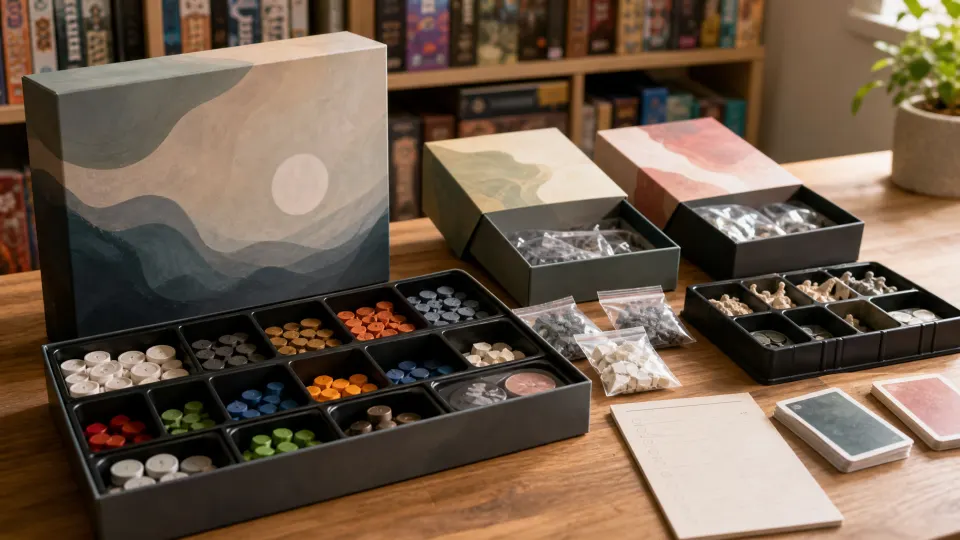
Measure base boxes, expansions, and migration notes
Start with a decision about what stays with the base game and what keeps its own box. Expansion boards, rulebooks, promo cards, and player aids may not fit even when tokens do. Check lid height, setup order, and the note that explains what moved before assigning the game to a shelf.
Store expansions by setup behavior
Keep expansions used every session with the base game. Store optional modules nearby but separate enough to avoid setup confusion. Rare expansions can move higher if the inventory note says where they went.
Mark where expansions live after components move
Expansion-heavy collections need a home for the box, the components, and the reminder note that connects them. Keep the base game and active expansions in the hand-height hallway section, then label any closed bin by game family instead of by vague overflow. If components move into the base box, mark the empty expansion box so setup does not turn into a search.
Write down what moved out of the original box
A simple inventory note prevents mystery components later. Record which expansion boxes were emptied, where rulebooks live, and whether inserts changed the box height or storage orientation.
Protect inserts from creating lid lift
An insert that raises the lid can stress box corners in a stack. Check for lid lift before shelving the game, and avoid vertical storage when loose trays let components slide.
Quick checklist for this storage plan
- Measure component migration and inventory notes before choosing the hallway staging shelf
- Keep expansion-heavy titles close to their inventory note
- Keep consolidated base boxes low if expansions make them heavier than expected
- Leave enough shelf room to pull the base box and check the expansion map
- Mark where each expansion lives after components move.
Board game fit check
Use this quick shelf check before buying bins, cabinets, or cube units for a small home.
- Primary measurement: base-box capacity, expansion count, insert height, and component map
- Clearance check: base-box capacity, component migration, and inventory-note access
- Access test: pull the base game and verify the expansion note before setup starts
- Calculator follow-up: confirm consolidated box height before removing expansion boxes
For a measured plan, use the board game shelf-fit calculator. You can also compare options in the shelf depth guide.