Planning guide
Board Game Storage by Collection Size
Collection size changes the job of the storage: a small library needs browsing space, while a large one needs access tiers and rules for growth. Count the current boxes, name the purge point, and leave a visible growth slot before the next purchase fills it.
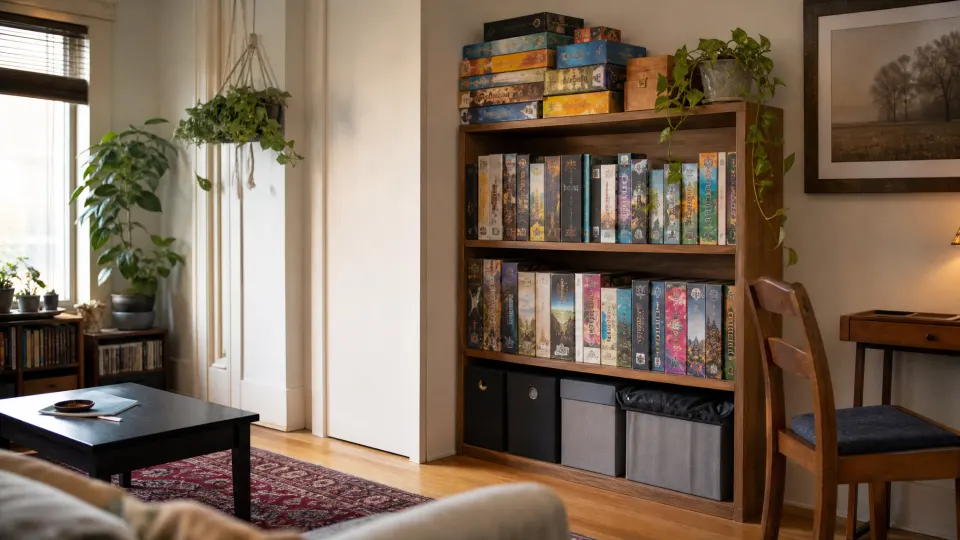
Plan ten, fifty, and one hundred games differently
A ten-game collection can live by favorite-game access; a fifty-game collection needs categories; a hundred-game collection needs growth rules and purge points. Count the current boxes, identify the largest footprint, and decide what number of open slots should trigger a re-sort before the shelf becomes a backlog.
Let collection size decide the access tiers
Small collections can keep nearly everything in reach. Larger collections need tiers: current plays at hand height, occasional games nearby, expansions and trade candidates outside the prime row. That tiering keeps the storage useful even as the count changes.
Set the capacity trigger before shopping
A 10-game collection needs browsing space; a 100-game collection needs rotation rules. Put current favorites in the comfortable office-corner access area and define the growth slot, purge point, or one-in-one-out trigger before the shelf fills. Closed zones should be labeled by purpose so collection size does not quietly turn into duplicate overflow.
Set capacity triggers before buying more furniture
Choose a visible trigger, such as two empty slots left, a full expansion row, or a trade pile that no longer fits its bin. When that trigger appears, reassign or remove games before adding another shelf. The rule should be simple enough to apply during normal cleanup.
Scale protection as the rows get denser
The more games a shelf holds, the more row pressure matters. Keep the dense favorites near supports, protect loose lids from tall vertical rows, and leave enough finger room that the biggest box does not drag its neighbors out with it.
Quick checklist for this storage plan
- Measure growth slots and purge points before choosing the office-corner shelf
- Keep the current collection size visible enough to trigger a purge point
- Keep heavy favorites low while leaving a visible slot for the next collection tier
- Leave an intentional growth slot before the shelf becomes a backlog
- Set a capacity trigger before the next shopping trip.
Board game fit check
Use this quick shelf check before buying bins, cabinets, or cube units for a small home.
- Primary measurement: current game count, growth slot, purge trigger, and favorite-game access
- Clearance check: current count, growth slot, purge trigger, and access to favorites
- Access test: add one new game to the tier plan without creating an overflow pile
- Calculator follow-up: compare fit results with the collection tier you expect next
For a measured plan, use the board game shelf-fit calculator. You can also compare options in the shelf depth guide.