Shelves guide
Horizontal Board Game Storage
Horizontal storage succeeds when each stack can be lifted without turning the shelf into a rebuild. Plan by stack height, box weight, and the front grip area so loose lids and heavy games stay protected without burying frequent plays.
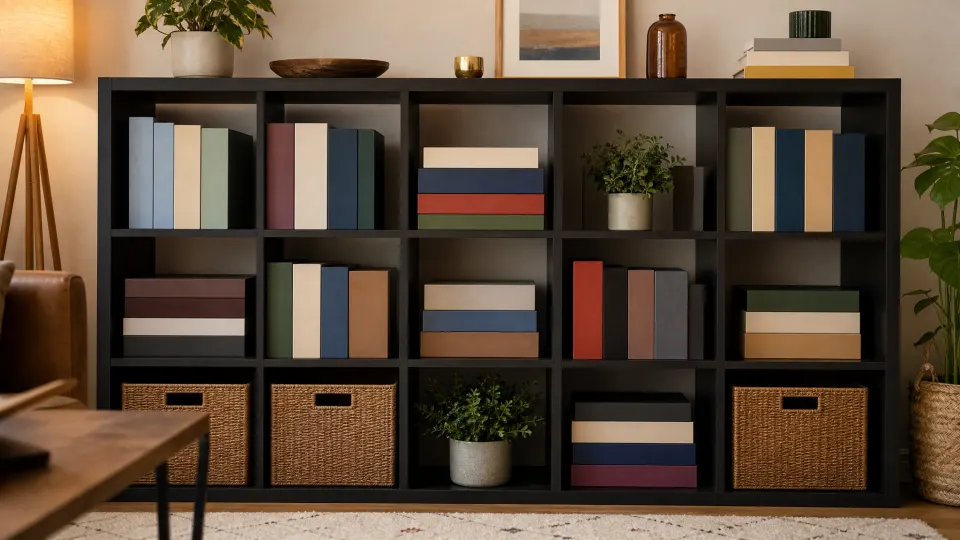
Size flat stacks by lift room and weight
Measure the stack height you can lift, not just the shelf height available. Flat storage is useful for loose lids and heavy games, but only when the middle or bottom box can be reached without rebuilding the shelf. Count the box heights, front grip, and overhead lift room together.
Use flat stacks where lids and weight demand it
Heavy games, loose lids, and fragile inserts usually behave better flat than upright. Keep each stack short enough that one person can lift the top boxes safely. Put the games played most often on the smallest stacks, not at the bottom of a tall pile.
Cap flat stacks before they become work
Horizontal storage is strongest for loose lids, heavy boxes, and games with inserts that shift when upright. Keep those stacks low enough that one person can lift the top boxes without dragging the whole row forward. Frequent plays should sit at the front edge, while tucked-away stacks need short labels so the bottom game is still findable.
Label stacks by retrieval order
Flat stacks need clearer category choices because only the top boxes are immediately readable. Group by play frequency, campaign, or box size, and keep a small return space near the stack. Avoid mixing tiny card games under large square boxes where they will be forgotten.
Limit pressure in each flat stack
A flat stack can protect a lid or crush it depending on weight. Put dense boxes at the bottom, cap the stack before the lift becomes awkward, and leave front clearance so a box is lifted cleanly instead of dragged by its corners.
Horizontal scenario: protecting loose lids
Flat storage is the better choice when a box lid lifts, an insert lets components shift, or a heavy game would lean against its neighbors. Keep the stack short enough that the bottom title is still reachable, then label the stack by play frequency or campaign.
Horizontal stack limits
| Factor | Choose | Avoid |
|---|---|---|
| Heavy strategy boxes | Low short stack | Tall stack above shoulder height |
| Frequent play | Top of stack or separate active shelf | Bottom of a five-box pile |
| Small boxes | Tray beside the stack | Small games under large boxes |
Quick checklist for this storage plan
- Measure stack height and lift room before choosing the living room shelf
- Keep heavy or loose-lid stacks low and close to the front
- Keep the heaviest flat stacks near the floor and below a clean lift height
- Limit each stack so one game can come out without unloading the shelf
- Cap each stack at the height one person can lift cleanly.
Board game fit check
Use this quick shelf check before buying bins, cabinets, or cube units for a small home.
- Primary measurement: safe stack height, box weight, and overhead lift room
- Clearance check: stack height, lift room, and the path back to the table
- Access test: take the middle game from a flat stack without rebuilding the whole row
- Calculator follow-up: use box height totals to cap each horizontal stack
For a measured plan, use the board game shelf-fit calculator. You can also compare options in the shelf depth guide.