Shelves guide
IKEA Board Game Storage
IKEA board game storage starts with shelf sizing, then matches furniture to the way the collection moves. Product names are less important than the current clear opening, shelf depth, backing, and side gap after any inserts or doors are added. Measure actual interior dimensions before assigning the fast-grab zone.
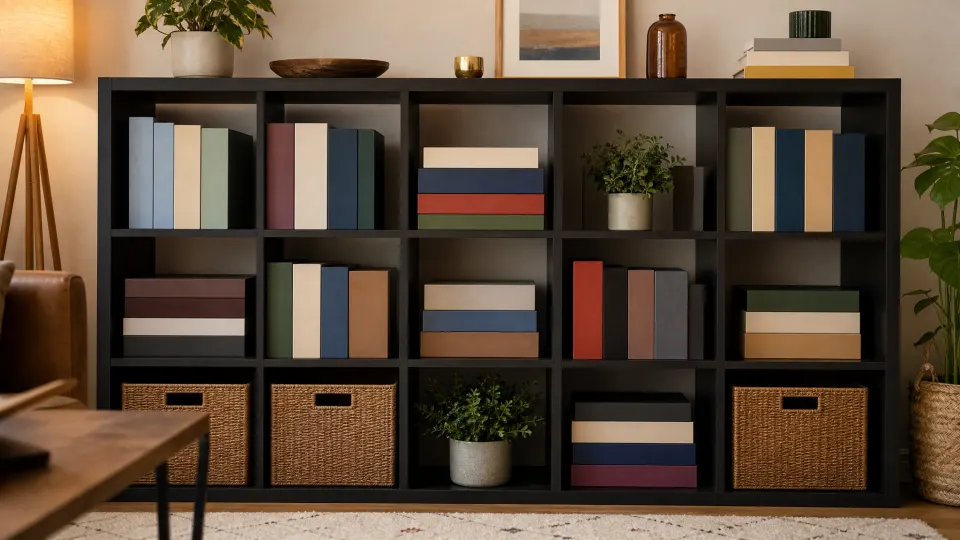
Verify current IKEA dimensions inside the opening
Check the current interior dimensions of the specific IKEA unit you are considering, including backs, doors, inserts, and shelf pins. Product families and accessories can change the practical opening. Test one real square box and one heavy box against the usable shelf before planning the layout.
Match IKEA openings to box behavior
Cubes, Billy-style shelves, and cabinets solve different problems. Put tight-lid boxes upright where spine scanning helps, keep heavy or loose-lid games flat and low, and reserve accessories for categories that actually need to be hidden or contained.
Check current IKEA dimensions before planning
IKEA names are less useful than the current interior opening, shelf depth, backing, and side clearance. Measure the specific cube, Billy, or cabinet option before assigning boxes, especially if inserts or doors change the opening. Frequent-play games should be obvious from the shelf face; hidden storage needs labels that can be read without unpacking the closet.
Keep IKEA zones readable after accessories
Doors and bins can make a room calmer, but they also hide spines. Label each cube, bin, or shelf by purpose: family games, card games, campaign boxes, overflow, or trade pile. Keep one small landing area for returns so game-night cleanup does not spill onto the floor.
Leave clearance around trim and inserts
A box that fits only before doors, bins, or trim are added is not a good daily fit. Leave side and front clearance, use bookends for upright rows, and keep oversized boxes where they slide out without catching an accessory edge.
Quick checklist for this storage plan
- Measure actual interior dimensions before choosing the closet cube shelf
- Keep cube, Billy, and cabinet candidates sorted by usable interior space
- Keep heavy IKEA cube loads low and check current dimensions before trusting old measurements
- Leave side clearance before treating any IKEA opening as a perfect fit
- Check the current product dimensions before planning a layout.
Board game fit check
Use this quick shelf check before buying bins, cabinets, or cube units for a small home.
- Primary measurement: current IKEA opening, shelf depth, backing, and side clearance
- Clearance check: current product opening, backing, shelf depth, and side gap
- Access test: fit a real box in the chosen IKEA opening and pull it without scraping trim
- Calculator follow-up: rerun measurements against current IKEA dimensions before planning the layout
For a measured plan, use the board game shelf-fit calculator. You can also compare options in the shelf depth guide.