Dimensions guide
Board Game Box Size Guide
Box size planning starts with the awkward formats: oversized squares, sleeved boxes, lid lift, and mixed footprints. Measure the widest and tallest games first, then choose shelves or bins that let those boxes move without squeezing the rest of the row.
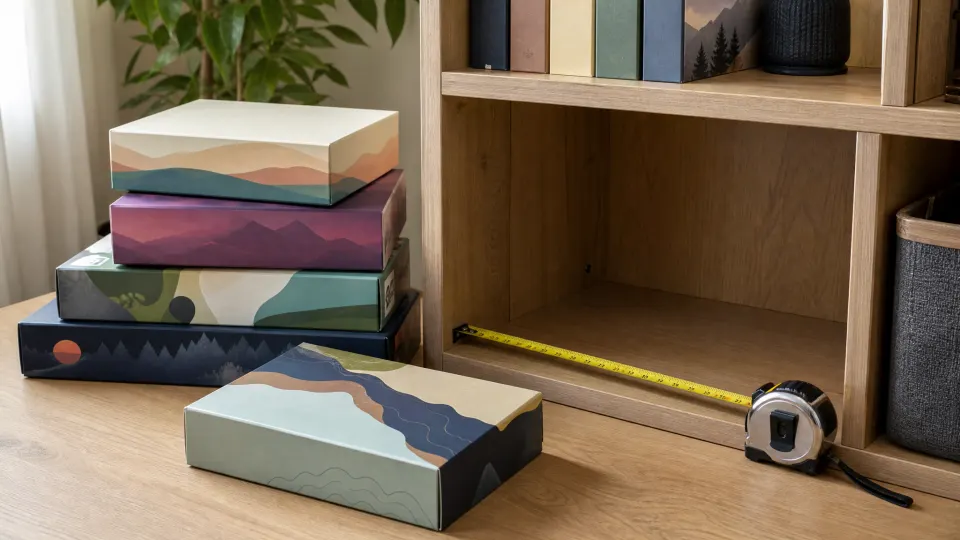
Sort box footprints before choosing storage
Measure width, depth, and height on the actual boxes you own. Publishers use many formats, and the largest box often decides the furniture even when most of the collection is smaller. Sort by footprint first, then check whether the widest and tallest boxes can move without rubbing the cabinet.
Turn box measurements into placement rules
A size chart should become a placement rule: oversized squares get the cleanest openings, tall boxes avoid low cubbies, and sleeved games need enough side room that lids do not rub. Leave a little clearance around the largest footprint instead of sizing the shelf to the average box.
Sort by footprint before choosing bins
Standard rectangles, oversized squares, sleeves, and boxes with lid lift all need different clearances. Put the awkward footprints on the easiest bedroom-cabinet shelf first, then let smaller standard boxes fill the cleaner rows. Grab-and-play titles can stay exposed, while secondary storage should be labeled by category instead of buried behind a mixed-size stack.
Record footprint sizes that affect future buys
Keep a short note with the largest footprint, tallest box, sleeve height, and any lid bulge that changes fit. Those measurements make new purchases easier to place and expose bins that only work for standard rectangles.
Use footprint measurements to avoid box wear
Footprint mismatches cause damage when wide boxes are twisted out, sleeves are compressed, or small boxes get trapped under larger formats. Give odd sizes their own placement rule so the collection is sorted by real handling pressure, not just by title.
Box-size scenario: one oversized game sets the rule
Most collections look standard until the largest campaign, deluxe, or sleeved box is measured. Use that box to decide the oversized zone first, then let normal square boxes fill the cleaner shelf rows instead of sizing the whole plan to the average game.
Box size placement table
| Factor | Choose | Avoid |
|---|---|---|
| Standard square | Cube or deep shelf with pull clearance | Shelf that exactly matches the box face |
| Oversized or long box | Separate low zone | Forcing it into the standard row |
| Card and small boxes | Labeled shallow bin | Deep shelf behind large titles |
Quick checklist for this storage plan
- Measure lid bulge and sleeve height before choosing the bedroom cabinet
- Give odd footprints a shelf where lids and sleeves are not squeezed
- Keep oversized footprints low and give small boxes a separate readable zone
- Keep retrieval space around the widest box, not the average one
- Sort boxes by footprint before choosing bins.
Board game fit check
Use this quick shelf check before buying bins, cabinets, or cube units for a small home.
- Primary measurement: largest footprint, sleeve height, lid bulge, and shelf opening
- Clearance check: largest footprint, sleeve height, and lid bulge inside the cabinet
- Access test: pull the widest box and confirm adjacent standard boxes still sit square
- Calculator follow-up: run the largest boxes first so the storage plan is not sized to averages
For a measured plan, use the board game shelf-fit calculator. You can also compare options in the shelf depth guide.