Cards guide
Trading Card Game Storage
Trading card storage should separate active decks, binders, bulk rows, and spare sleeves before everything shares one box. Measure binder height, divider width, and label sightlines so the decks in rotation stay reachable while archive cards stay contained.
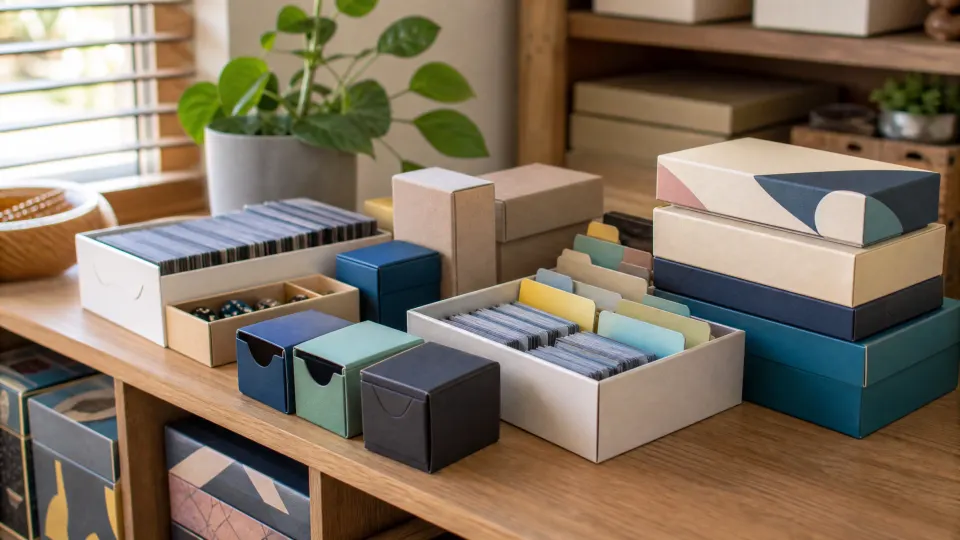
Plan binder and deck-box clearance together
Plan TCG storage around the objects that actually move: full binders, active deck boxes, trade rows, spare sleeves, and bulk boxes. Binder height and deck-box depth can compete for the same shelf, so test both before buying another case. Keep the current rotation reachable while bulk cards get a clearly marked archive spot.
Separate played decks from archive cards
Keep active decks and family card games in the easiest spot. Bulk cards, spare sleeves, and rarely used expansions can live lower or farther back. This keeps game night fast without mixing archive storage into the play shelf.
Separate active decks from bulk early
Trading card storage becomes frustrating when binders, deck boxes, and bulk rows all compete for the same shelf. Give active decks and current binders exposed space that clears the closet door, then move bulk cards into clearly marked boxes. Concealed storage should be obvious enough that another player can return cards without learning the whole system.
Use dividers that match how the cards are played
Sort by game, deck, set, or player count instead of building a perfect catalog. A few durable dividers are easier to maintain than a label for every small stack.
Protect cards from pressure and loose movement
Cards bend when boxes are overfilled or stored sideways without support. Leave room for fingers, keep deck boxes upright, and avoid tossing card games into bins with heavy board-game boxes.
Quick checklist for this storage plan
- Measure binder height and sorting labels before choosing the closet card shelf
- Put active decks and binders where labels can be read without digging
- Keep full binders low and bulk boxes where they will not crush deck boxes
- Keep enough shelf height for binders to tilt out safely
- Separate active decks from bulk before sizing storage.
Board game fit check
Use this quick shelf check before buying bins, cabinets, or cube units for a small home.
- Primary measurement: binder height, deck-box rows, bulk-card depth, and label sightline
- Clearance check: binder height, deck-box rows, bulk storage, and label visibility
- Access test: tilt out a binder and pull a deck box without disturbing bulk storage
- Calculator follow-up: use the fit result only after binder and deck-box sizes are separated
For a measured plan, use the board game shelf-fit calculator. You can also compare options in the shelf depth guide.