Systems guide
Board Game Labeling System
A labeling system earns its place when another player can find a game, return it, and update the shelf without asking for the hidden rules. Keep the visible labels tied to real storage decisions, then push rare details into a note or spreadsheet.
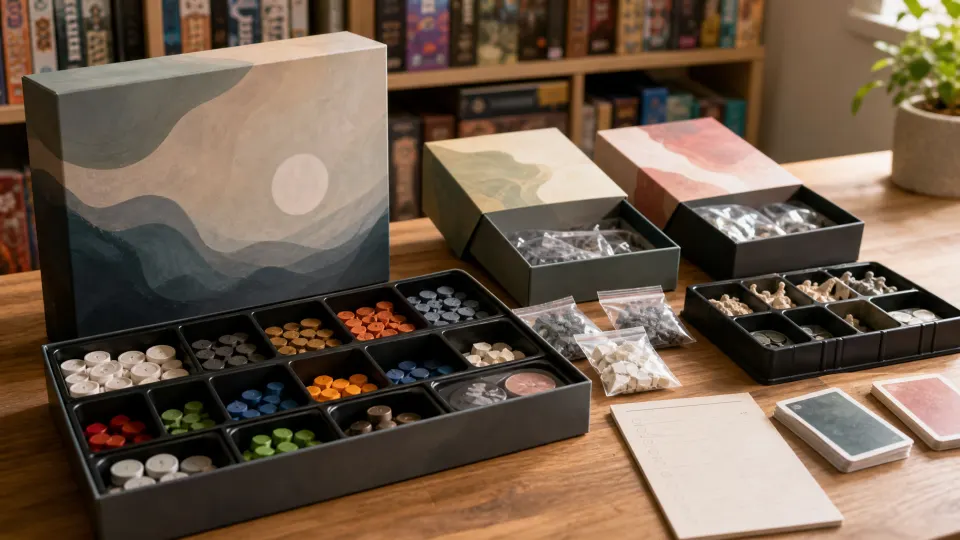
Design labels around the way people search
Build labels from shelf questions, not from a perfect catalog. A player usually needs to know whether a game is family-friendly, where expansions live, whether it is borrowed, or which bin takes it after cleanup. Put those answers on shelf faces or bin fronts, then move rare notes somewhere that does not clutter the everyday label.
Make labels speed up finding and returning
A useful system tells players where to find a game and where to return it. Use shelf codes, zones, or a spreadsheet only if they make cleanup and searching faster.
Write labels people will actually maintain
A labeling system should be short enough to survive normal cleanup. Use shelf codes or plain category tags for shared collections in the bedroom cabinet, then put the label where it can be read before the door or bin is opened. Visible rows can speed up selection, but closed bins should state exactly which game family, age group, or expansion set they hold.
Keep shelf labels short enough to maintain
Limit each visible label to the return decision it needs to make: family night, two-player, expansions, loaned out, or leaving soon. When the wording needs a legend, the shelf is doing too many jobs. Move the extra detail into the inventory note and leave the physical tag readable from a normal standing position.
Let labels reveal crowded shelves early
Inventory notes should call out crowded shelves, missing components, and titles that need a new home. Check the list before buying another shelf or squeezing one more expansion into a crowded box.
Quick checklist for this storage plan
- Measure label visibility and maintenance time before choosing the bedroom cabinet
- Keep shared collections where labels can be read before doors are opened twice
- Keep shared heavy games where the label can be read before someone starts moving boxes
- Leave label sightlines clear enough that the system survives cleanup
- Use labels short enough that everyone keeps using them.
Board game fit check
Use this quick shelf check before buying bins, cabinets, or cube units for a small home.
- Primary measurement: label sightline, shelf code position, cabinet swing, and shared access
- Clearance check: label face, cabinet swing, shared access, and maintenance time
- Access test: ask another player to find and return a game using only the shelf label
- Calculator follow-up: use fit results to assign shelf codes that match real storage zones
For a measured plan, use the board game shelf-fit calculator. You can also compare options in the shelf depth guide.