Rooms guide
Living Room Board Game Storage
Living-room storage has to balance quick play with a room that still looks and moves like a living room. Trace the coffee-table path, floor-risk zones, and visible clutter before deciding which games stay exposed and which belong behind labeled doors.
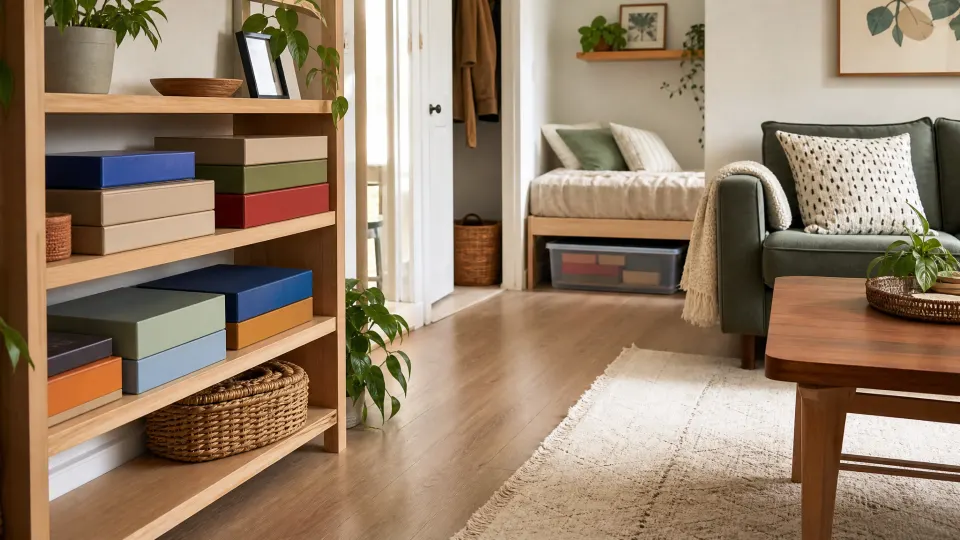
Plan the route from shelf to main table
For living room board game storage, test the walk from the shelf to the main play surface while the room is set up normally. Coffee tables, ottomans, media cabinets, and side chairs decide whether a heavy box can be carried cleanly. Keep the best-played games on a shelf face that does not require crossing the busiest seating path.
Keep the carry path clear of seating and decor
Place frequent living-room games near the table or along a route that does not require moving chairs, baskets, or decor. Store heavy games where they can be carried straight to the play surface. Overflow can live farther away only when the label makes the trip predictable.
Keep the shelf-to-table route boring
Living-room storage works when a player can carry a box to the table without moving seating, decor, or a stack of unrelated games. Put the games that travel to the main table in the fastest retrieval spot and keep the visible zones few enough to reset quickly. Closed living-room storage should name its contents clearly, because tidy doors are only useful when the right game is still easy to find.
Keep quiet living-room storage readable
If visual clutter is the reason a game moves behind a door or into a basket, label the front before it disappears. A small list inside a cabinet or on the bin face is enough. The living room should stay calm without turning game selection into a search.
Protect boxes from living-room traffic
The main risks in a living room are bumped corners, blocked walkways, sunlight, and quick cleanup. Keep boxes off traffic edges, avoid sunny floor spots, and put visually heavy stacks low enough that the shelf does not dominate the room.
Quick checklist for this storage plan
- Measure coffee-table paths and visual clutter before choosing the hallway-to-table route
- Keep table-bound games where the carry path stays clear
- Keep visually heavy boxes low so the living room shelf still feels calm
- Leave enough approach space that the living room does not need rearranging
- Choose fewer visible zones and make each one easy to reset.
Board game fit check
Use this quick shelf check before buying bins, cabinets, or cube units for a small home.
- Primary measurement: table route, coffee-table clearance, shelf face, and largest carried box
- Clearance check: coffee-table path, visual clutter, shelf face, and carry route
- Access test: carry a game from shelf to table without moving seating or decor
- Calculator follow-up: compare shelf fit with the actual path to the table
For a measured plan, use the board game shelf-fit calculator. You can also compare options in the shelf depth guide.