Collections guide
Board Game Insert Storage
Treat insert fit and lid lift as the first fit test, not as a decoration choice. Expansion-heavy collections need an inventory trail after components are consolidated. Use lid lift and vertical storage risk as the tiebreaker for the shelves closest to normal play.
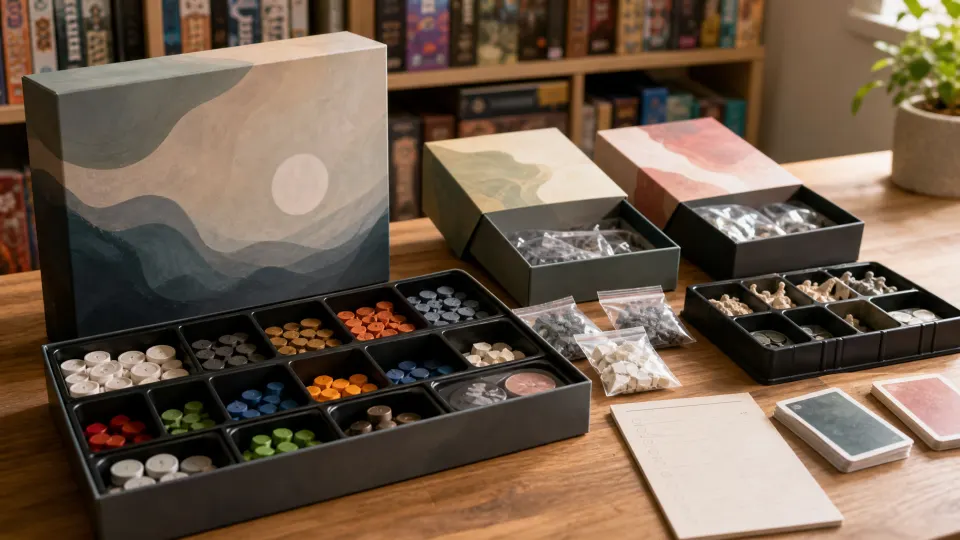
Check insert height, lid lift, and component movement
Test the insert with the game fully packed, including sleeved cards, bagged tokens, rulebooks, and any expansion trays that replaced the original wells. An insert that looks efficient empty can create lid lift or loose movement once everything returns. Use that packed-box result to decide whether the game needs flat storage, a nearby module box, or a clear orientation label.
Store insert modules by setup behavior
Keep insert trays and modules used every session with the base game, especially when they control setup order. Optional trays can sit nearby if the label explains what changed from the original box. Rare modules can move higher only when the insert note says where the components went.
Check lid lift before moving upright
Custom inserts can make setup faster while making storage orientation stricter. Put insert-heavy regular plays on a dining-area shelf where the box can stay flat if the lid lifts or components slide. If a box must move into closed storage, label the safe orientation so cleanup does not undo the insert's work.
Record every insert-driven box change
A simple insert note prevents mystery components later. Record which trays replaced the publisher insert, whether rulebooks moved, and whether the new layout changed lid height or storage orientation. The note should live where setup happens, not in a separate system nobody checks.
Prevent custom inserts from stressing lids
A custom insert that raises the lid can turn normal shelf pressure into corner wear. Check lid lift with the game fully packed before shelving it, and avoid vertical storage when trays or token wells let components slide. If the lid floats, store the game where nothing heavy rests on top.
Quick checklist for this storage plan
- Measure lid lift and vertical storage risk before choosing the dining-area prep zone
- Keep custom inserts where the lid can be checked before storage
- Keep boxes with raised lids out of tall stacks until the insert passes a pressure check
- Leave room to inspect lid lift before the box goes upright
- Check lid lift before moving a box upright.
Board game fit check
Use this quick shelf check before buying bins, cabinets, or cube units for a small home.
- Primary measurement: insert height, lid lift, component slide, and storage orientation
- Clearance check: insert height, lid pressure, and orientation risk during shelving
- Access test: shelf the box flat and upright to confirm components and lid pressure stay controlled
- Calculator follow-up: compare box height with insert changes before stacking or storing upright
For a measured plan, use the board game shelf-fit calculator. You can also compare options in the shelf depth guide.